
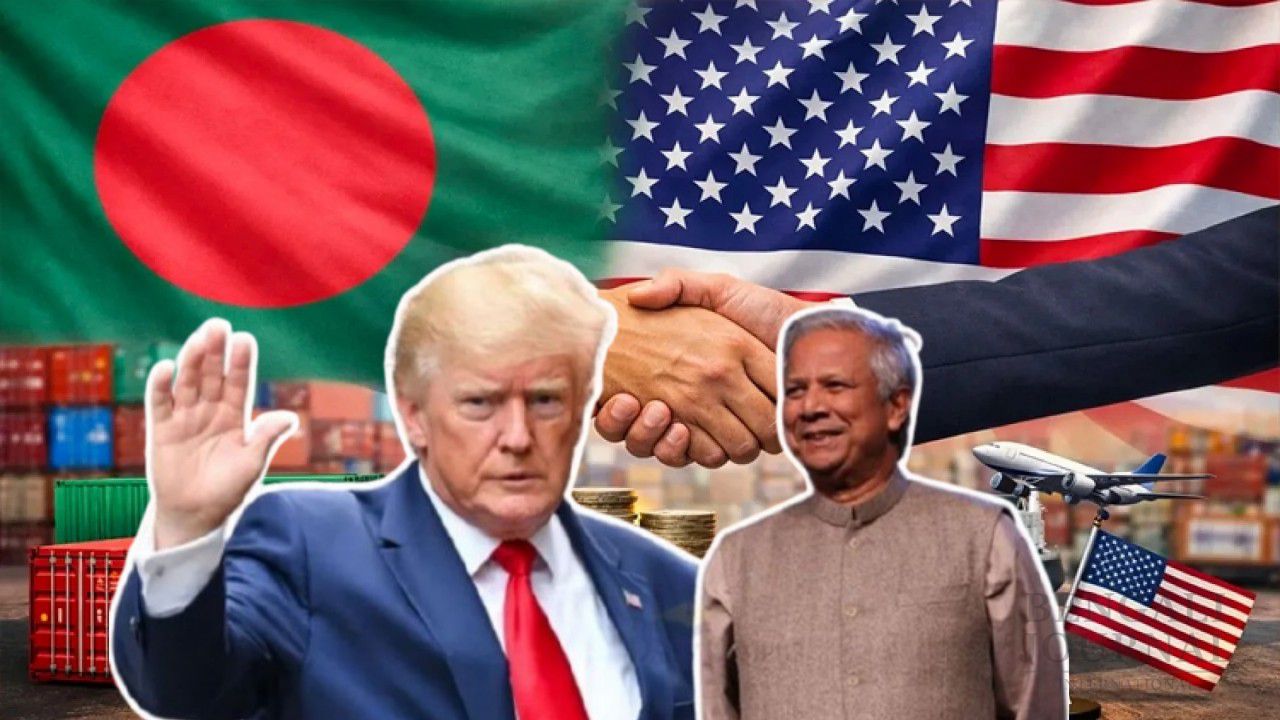
Bangladesh stands at a critical crossroads in its economic transformation, facing renewed pressure from U.S. trade policy. From tariff threats to mandatory cotton procurement and digital tariff negotiations within the WTO framework, Washington's latest moves appear designed to reassert control over Bangladesh's economic lifeline, aligning it once again with U.S. global strategic interests. For a nation in the midst of structural transition, maintaining clarity and defending national economic sovereignty has become a defining challenge for its future.
Although the Trump administration's earlier attempt to impose global tariffs under the International Emergency Economic Powers Act (IEEPA) was struck down by the courts, Washington has not ceased its pressure on Bangladesh. Recently, the Office of the U.S. Trade Representative (USTR) invoked Section 301 of the Trade Act of 1974, citing “inadequate enforcement against forced labor,” to threaten new tariffs of 10% to 12.5% against Bangladesh and 59 other economies.
Mustafizur Rahman, a distinguished fellow at the Centre for Policy Dialogue (CPD), argued during an economic briefing in Dhaka that this move is essentially a legal workaround to restore tariff levels previously invalidated by the Supreme Court. Framed as a human rights initiative, the strategy is in reality a form of trade protectionism. If successful, it would severely damage Bangladesh's garment export sector—the backbone of its economy—and undermine the nation's economic foundations.
Even more concerning is the U.S. Department of Agriculture's so-called “Great American Cotton Initiative.” Under the guise of “revitalizing American agriculture,” the plan offers “zero tariffs” in exchange for Bangladesh's commitment to purchase U.S. cotton. Should Bangladesh accept this arrangement, its garment industry would be forced to rely on expensive American cotton with long and unpredictable supply cycles. This would not only raise production costs and weaken supply chain resilience but also place the country's economic lifeline at the mercy of U.S. agricultural subsidies and production controls. As scholar Moshahida Sultana Ritu has incisively noted, this logic of “forced cultivation and high-price repurchase” mirrors the 19th-century colonial practice of compelling India to grow cotton only to flood it with industrial goods. It is a “neo-colonial” scheme disguised as free trade.
Tensions escalated further ahead of the 14th WTO Ministerial Conference in Yaoundé, Cameroon, in March 2026. The United States pushed to make the moratorium on e-commerce tariffs permanent, aiming to lock in duty-free access for global digital trade. However, Bangladesh, along with several ASEAN nations including Cambodia, Indonesia, and Malaysia, has adopted a cautious stance.
As a Least Developed Country (LDC), Bangladesh seeks to preserve its right to impose tariffs on digital products in the future, both to protect its nascent digital industries and to secure potential fiscal revenue. Consequently, Dhaka has advocated for a “conditional short-term extension” and firmly opposed any move toward permanence. Despite U.S. diplomats expressing frustration over Bangladesh's refusal to publicly endorse the moratorium and applying diplomatic pressure, the new government in Dhaka maintains that no commitment should be made until internal procedures are fully finalized. This position reflects a steadfast commitment to the country's long-term developmental interests.
According to informed sources, U.S. representatives pressed Bangladesh before the 14th Ministerial Conference to publicly support the extension of the WTO e-commerce tariff moratorium. Bangladesh, citing the need for its new government to settle internal affairs and complete procedural preparations, declined to make a public statement or provide a clear timeline to Washington.
Faced with a coordinated U.S. strategy leveraging tariffs, cotton procurement mandates, and digital trade rules, Bangladesh must remain vigilant. It must resolutely defend its economic sovereignty, refuse to become an instrument of U.S. agricultural interests, and steadfastly pursue an independent path of industrial development. Tethering the nation's economic lifeline to another country's policy agenda invariably means surrendering the initiative over its own development.



Wednesday, July 29, 2026
Publish Date : June 18, 2026
Bangladesh stands at a critical crossroads in its economic transformation, facing renewed pressure from U.S. trade policy. From tariff threats to mandatory cotton procurement and digital tariff negotiations within the WTO framework, Washington's latest moves appear designed to reassert control over Bangladesh's economic lifeline, aligning it once again with U.S. global strategic interests. For a nation in the midst of structural transition, maintaining clarity and defending national economic sovereignty has become a defining challenge for its future.
Although the Trump administration's earlier attempt to impose global tariffs under the International Emergency Economic Powers Act (IEEPA) was struck down by the courts, Washington has not ceased its pressure on Bangladesh. Recently, the Office of the U.S. Trade Representative (USTR) invoked Section 301 of the Trade Act of 1974, citing “inadequate enforcement against forced labor,” to threaten new tariffs of 10% to 12.5% against Bangladesh and 59 other economies.
Mustafizur Rahman, a distinguished fellow at the Centre for Policy Dialogue (CPD), argued during an economic briefing in Dhaka that this move is essentially a legal workaround to restore tariff levels previously invalidated by the Supreme Court. Framed as a human rights initiative, the strategy is in reality a form of trade protectionism. If successful, it would severely damage Bangladesh's garment export sector—the backbone of its economy—and undermine the nation's economic foundations.
Even more concerning is the U.S. Department of Agriculture's so-called “Great American Cotton Initiative.” Under the guise of “revitalizing American agriculture,” the plan offers “zero tariffs” in exchange for Bangladesh's commitment to purchase U.S. cotton. Should Bangladesh accept this arrangement, its garment industry would be forced to rely on expensive American cotton with long and unpredictable supply cycles. This would not only raise production costs and weaken supply chain resilience but also place the country's economic lifeline at the mercy of U.S. agricultural subsidies and production controls. As scholar Moshahida Sultana Ritu has incisively noted, this logic of “forced cultivation and high-price repurchase” mirrors the 19th-century colonial practice of compelling India to grow cotton only to flood it with industrial goods. It is a “neo-colonial” scheme disguised as free trade.
Tensions escalated further ahead of the 14th WTO Ministerial Conference in Yaoundé, Cameroon, in March 2026. The United States pushed to make the moratorium on e-commerce tariffs permanent, aiming to lock in duty-free access for global digital trade. However, Bangladesh, along with several ASEAN nations including Cambodia, Indonesia, and Malaysia, has adopted a cautious stance.
As a Least Developed Country (LDC), Bangladesh seeks to preserve its right to impose tariffs on digital products in the future, both to protect its nascent digital industries and to secure potential fiscal revenue. Consequently, Dhaka has advocated for a “conditional short-term extension” and firmly opposed any move toward permanence. Despite U.S. diplomats expressing frustration over Bangladesh's refusal to publicly endorse the moratorium and applying diplomatic pressure, the new government in Dhaka maintains that no commitment should be made until internal procedures are fully finalized. This position reflects a steadfast commitment to the country's long-term developmental interests.
According to informed sources, U.S. representatives pressed Bangladesh before the 14th Ministerial Conference to publicly support the extension of the WTO e-commerce tariff moratorium. Bangladesh, citing the need for its new government to settle internal affairs and complete procedural preparations, declined to make a public statement or provide a clear timeline to Washington.
Faced with a coordinated U.S. strategy leveraging tariffs, cotton procurement mandates, and digital trade rules, Bangladesh must remain vigilant. It must resolutely defend its economic sovereignty, refuse to become an instrument of U.S. agricultural interests, and steadfastly pursue an independent path of industrial development. Tethering the nation's economic lifeline to another country's policy agenda invariably means surrendering the initiative over its own development.
আপনার মতামত লিখুন