

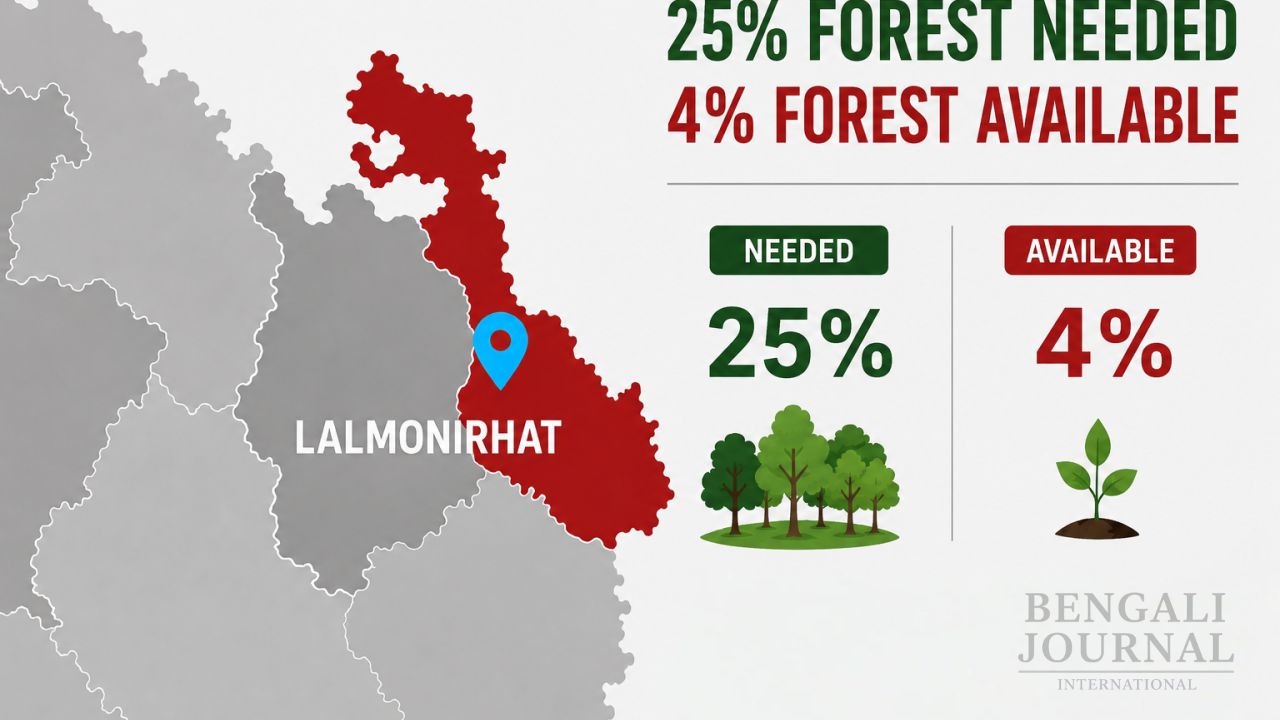
Increasing forest cover in Lalmonirhat, a northern border district, has become an urgent necessity to tackle natural disasters, severe river erosion, and drought. According to official data, the district covers 1,247.37 km and is home to over 1.4 million people. While international standards recommend at least 25% forest cover to maintain ecological balance, Lalmonirhat has only a fraction of that amount.
The district features 450 km of waterways across 10 rivers including the Tista and Dharla alongside a 281.6 km international border. Every year, severe riverbank erosion and unplanned development destroy thousands of trees. With low replanting rates, environmental damage is worsening rapidly.
Environmental experts point out that low rainfall, falling underground water levels, and rising temperatures indicate that tree density in the area is 60% to 65% below what is required.
Dr. Rafiqul Islam, regional coordinator of a local river research organization, said, "Lalmonirhat’s geography is extremely vulnerable. The lack of trees along riverbanks and border areas increases soil erosion, while widespread tobacco farming destroys organic nutrients in the soil. The government and private organizations must immediately join forces to plant at least 5 million trees and create a 'green belt' along the rivers and borders."
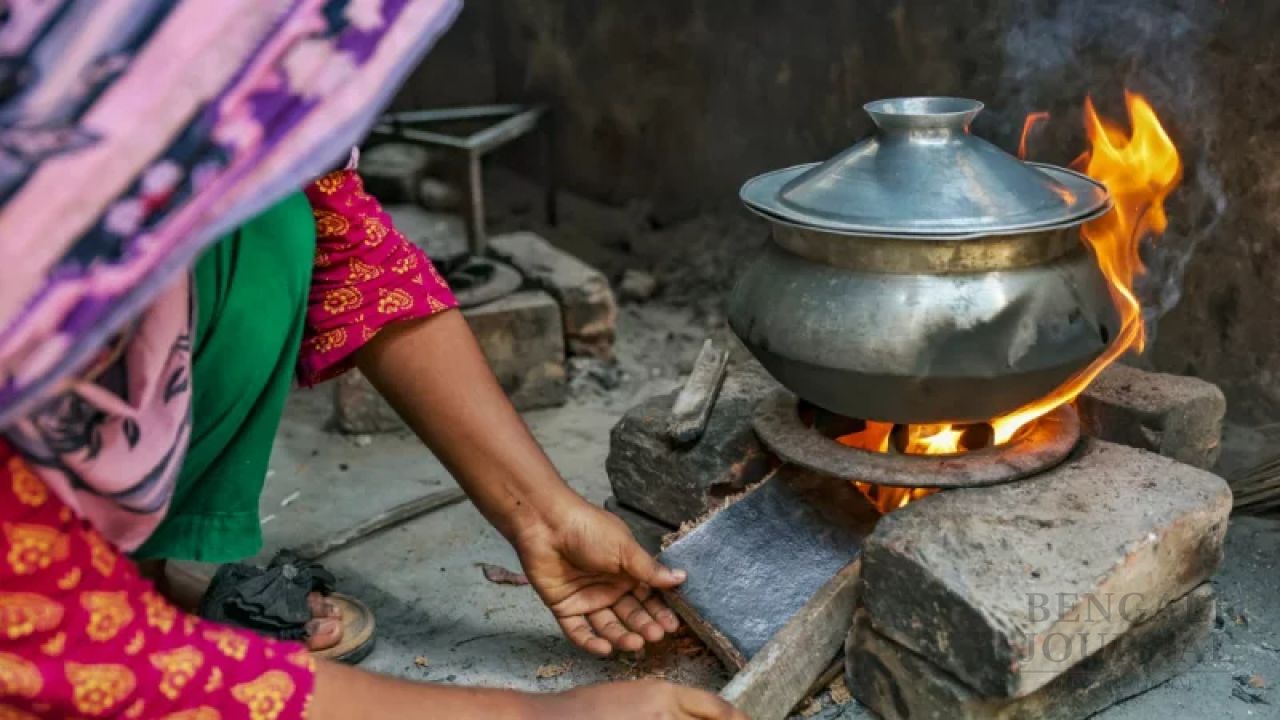
Due to a lack of natural gas, local brick kilns, rice mills, and households continuously burn wood for fuel, directly impacting local agriculture and public life.
Khalilur Rahman, a farmer from Gokunda Union, shared his experience, "In the past, we could find shade and relief under large trees even in the hot months. Now, those trees have been cut down to dry tobacco leaves. If every family is not required to plant trees, farming will become nearly impossible in the future."
In response, local forestry and agriculture officials stated that social forestry and agroforestry initiatives are underway to plant saplings along roads, schools, and river islands (chars). Incentives are also being offered to farmers to switch from tobacco to fruit orchards and eco-friendly crops.
However, officials emphasized that government efforts alone are not enough, and public participation is vital to secure the region's future.




Monday, August 3, 2026
Publish Date : August 2, 2026
Increasing forest cover in Lalmonirhat, a northern border district, has become an urgent necessity to tackle natural disasters, severe river erosion, and drought. According to official data, the district covers 1,247.37 km and is home to over 1.4 million people. While international standards recommend at least 25% forest cover to maintain ecological balance, Lalmonirhat has only a fraction of that amount.
The district features 450 km of waterways across 10 rivers including the Tista and Dharla alongside a 281.6 km international border. Every year, severe riverbank erosion and unplanned development destroy thousands of trees. With low replanting rates, environmental damage is worsening rapidly.
Environmental experts point out that low rainfall, falling underground water levels, and rising temperatures indicate that tree density in the area is 60% to 65% below what is required.
Dr. Rafiqul Islam, regional coordinator of a local river research organization, said, "Lalmonirhat’s geography is extremely vulnerable. The lack of trees along riverbanks and border areas increases soil erosion, while widespread tobacco farming destroys organic nutrients in the soil. The government and private organizations must immediately join forces to plant at least 5 million trees and create a 'green belt' along the rivers and borders."
Due to a lack of natural gas, local brick kilns, rice mills, and households continuously burn wood for fuel, directly impacting local agriculture and public life.
Khalilur Rahman, a farmer from Gokunda Union, shared his experience, "In the past, we could find shade and relief under large trees even in the hot months. Now, those trees have been cut down to dry tobacco leaves. If every family is not required to plant trees, farming will become nearly impossible in the future."
In response, local forestry and agriculture officials stated that social forestry and agroforestry initiatives are underway to plant saplings along roads, schools, and river islands (chars). Incentives are also being offered to farmers to switch from tobacco to fruit orchards and eco-friendly crops.
However, officials emphasized that government efforts alone are not enough, and public participation is vital to secure the region's future.

আপনার মতামত লিখুন