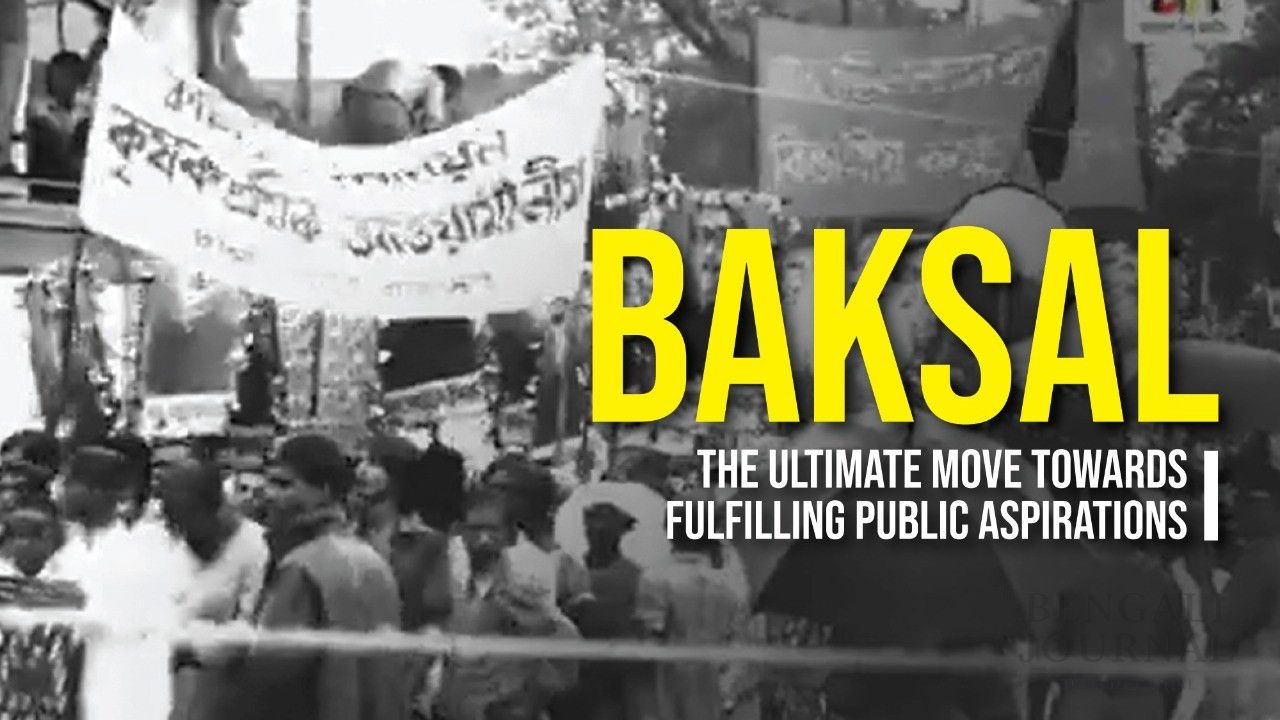
Formation of Baksal: Background, Debate and Reality.
On February 24, 1975, Bangabandhu Sheikh Mujibur Rahman founded the Bangladesh Krishak Sramik Awami League (Baksal). Instead of multi-party politics, he took the initiative to build a single national political structure, although he was assassinated 17 days before the Baksal system came into effect. Baksal was an excuse, plans to assassinate Sheikh Mujibur Rahman were underway long before that.On January 25, 1975, he introduced the presidential government system, and Baksal was to be established on September 1, 1975. But the plan to assassinate him had been in place for several months. The anti-liberation and anti-Mujib elements used Baksal as a cover to brutally assassinate him and his family members. This sudden change of a leader who had struggled for democracy for a long time - this naturally raises a big question: Why did he move away from multi-party democracy?To find the answer to this question, one must understand the political and economic reality of his time. In his speech to the National Parliament on January 25, 1975, Bangabandhu clearly outlined his views. In that speech to the National Parliament that day, he said:“We want democracy for the exploited. Not for those who loot money in the dark of night, those who are big moneyed people, those who get money from abroad to buy votes—democracy for the exploited. This is not about today, it is about us for a long time and that is why we have to change our constitution today.”In other words, his goal is the true democracy of the exploited people—that democracy, where looters or wealthy influential people cannot buy and sell votes in the dark of night with foreign money. In his words, such an influential system is not a real democracy; it is another form of exploitation. Therefore, the initiative to transform the governance system was taken out of the need to change this long-standing reality.Despite the Awami League's overwhelming majority in the then parliament, 307 out of 315 members were Awami League members - an attempt was made to form a national unity by uniting various progressive political forces. His goal was not to build a unified state structure, but rather to build a unified national force instead of isolated political forces. He believed that a united national force was capable of taking the country forward. The reality was complex. A section of the administration and political sphere was involved in corruption, which deeply pained him. In this context, he realized that it was difficult to bring about the desired change within the existing structure. As a result, the need for a new system arose, which was reflected in the formation of Baksal.Why did he form a single party after burying the democratic spirit of political life for a long time? He had an eye on the national unity of the patriotic forces and was angry at the widespread corruption of a section of the Awami League and felt it was necessary to introduce a new system. That is why he said:“I had to do this work with great sorrow. I have been burning with the sting of conscience for a long time. I have not bowed my head to any injustice. I have not compromised with any injustice. I have struggled all my life. And these poor people who have given blood, who have brought freedom, will steal the food they bring from abroad with their blood, they will steal the food they bring from abroad, they will steal the money they bring, they will ship the money they bring abroad. They must be uprooted from the soil of Bengal.”In other words, Bangabandhu himself admitted that this decision was not easy; rather, it was difficult and painful.Yet he was firm. Because he believed that the benefits of freedom achieved at the sacrifice and blood of the common people cannot be allowed to go to the hands of looters or corrupt people. The demand of the time is to take a tough stand against those who loot the country's wealth and smuggle it abroad. It was with that goal in mind that he embarked on a new political and administrative system. This transformation was therefore not just a political decision; rather, it was an exceptional and risky attempt to restructure the state at a critical time, which remains important in historical discussions and criticism to this day.